
The final two, putting this slow-burning feature out of its misery...
4 Harry Cleaver - Reading Capital Politically
I´m one of those people who always takes a mountain of books with him every time I travel anywhere, a sub-conscious acknowledgment of how lazy I am whenever nobody expects me to work for a living (a friend recently described my trip to visit them as me having ´experienced the internet of Australia´). One time I was in Vienna, staying with a friend (as a man of limited means, but cosmopolitan acquaintances this is how I take holidays ...), and he was flicking through my books. This man, being one of the most educated men that I know, idly passed comment on each volume, until he came to this diminutive little book.
"Is there another way of reading Capital other than politically?" He asked me, and I mumbled something unintelligent about reading it philosophically, economically, sociologically etc etc. But I didn´t get across Cleaver´s actual meaning of the title which he expresses as follows:
I intend to return to what I believe was Marx's original purpose: he wrote Capital to put a weapon in the hands of workers.Simply that the purpose of it (and I think every political book) should be to accumulate knowledge for the social war that we´re in the middle of. A simple, powerful sentiment, which Cleaver illustrates by applying aspects of the book to the world he lived, with its contemporary struggles and the world we actually lived in.
It´s much more effective than trying to shoe-horn the world into the prescription of political activists who have long since being dragged off the stage, icepick lodged in cranium. There´s the perceptive application of the theory to the changing face of capitalism in the last 40-50 years, and the effective explanation of how capitalism is forced to transform itself in the face of what we (the working class) do to it (if nothing else I think it inspired the best contemporary book on this topic Beverley Silver´s Forces of Labor). More than that, it´s one of the best practical guides to the bearded one´s work that you´re likely to find. It´s also small enough to fit in your pocket or to read online if you have the time.
5 Jose Peirats - Anarchists in the Spanish Revolution
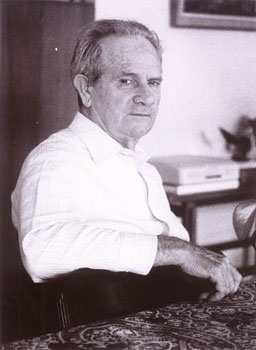 There´s a possibility that you will see the title of this section and sigh, as another anarchist flags up the profound effect of the Spanish Civil War on his political outlook. Fear not, I´m going to take a slightly controversial line. Obsessing about the Spanish Civil War can be damaging to your political health. In fact, dwelling on that past is possibly the most debilitating aspect of most anarchist groups.
Once you get bogged down on what things worked in the past, how they were organised in the past and what that means for our ideology, you´re finished. You´re a glorified historical recreation society busily trying to promote nostalgia for a revolution that happened over seventy years ago. Yes, if you´re anything like me you´ve a fondness for crying at the end of Land and Freedom, and if you lived in Spain you´ll be trying to convince your friends they want to go and see La Mujer del Anarquista at the weekend.
But modern life is not the same as semi-rural, church-dominated 1930s Spain, we aren´t re-creating the struggles of way back when, we´re existing in a modern world. In every era workers came up with innovative ways of defending themselves under capitalism and even pushing those societies toward revolution. What they came up with suited where and when they lived. Later on new generations invented new structures and organisations that suited what they wanted and how they might set about getting it. But soviets and factory councils weren´t the same as syndicates and collectives, nor were they the same as what developed in any of the revolutionary moments after that. Every time we invent something new, be it in the Hungarian Revolution or May ´68. It doesn´t come off the pamphlet in some anarchist or communist pocket, it comes out of everyday life and experience.
So what did I get out of Jose Peirats´ shorter book (there´s a 3 volume one too!)? Peirats was a member of the CNT all of his life, a historian and educator too. His book isn´t a whitewash, nor is it a hagiography of martyrs. It´s an explanation and a criticism of how he sees that the revolution went wrong. He was a convinced anarchist all his life and he was honest enough to criticise the conduct of his own organisation. It was great when I read this to understand why we don´t make examples out of history, we learn lessons and think about what happens and what´s happening now. We try not to wallow in nostalgia and assess honestly the shortcomings of our own history.
Most of all we understand that everything in history is compromised, not just by the dominant classes but by ourselves and the fact the reality is dirty and is far from Utopian. As I explained to a friend recently, I´m not a Utopian, I´m someone who wants things to better and thinks he has some insight into why they are how they are. I shouldn´t have to judge myself against the criteria of any imaginary world but on the quality and utility of my ideas in real life and in contrast to the ideals of others.


