Showing posts with label books. Show all posts

Friday, 30 January 2009

Books again


The final two, putting this slow-burning feature out of its misery...

4 Harry Cleaver - Reading Capital Politically

I´m one of those people who always takes a mountain of books with him every time I travel anywhere, a sub-conscious acknowledgment of how lazy I am whenever nobody expects me to work for a living (a friend recently described my trip to visit them as me having ´experienced the internet of Australia´). One time I was in Vienna, staying with a friend (as a man of limited means, but cosmopolitan acquaintances this is how I take holidays ...), and he was flicking through my books. This man, being one of the most educated men that I know, idly passed comment on each volume, until he came to this diminutive little book.

"Is there another way of reading Capital other than politically?" He asked me, and I mumbled something unintelligent about reading it philosophically, economically, sociologically etc etc. But I didn´t get across Cleaver´s actual meaning of the title which he expresses as follows:

I intend to return to what I believe was Marx's original purpose: he wrote Capital to put a weapon in the hands of workers.
Simply that the purpose of it (and I think every political book) should be to accumulate knowledge for the social war that we´re in the middle of. A simple, powerful sentiment, which Cleaver illustrates by applying aspects of the book to the world he lived, with its contemporary struggles and the world we actually lived in.

It´s much more effective than trying to shoe-horn the world into the prescription of political activists who have long since being dragged off the stage, icepick lodged in cranium. There´s the perceptive application of the theory to the changing face of capitalism in the last 40-50 years, and the effective explanation of how capitalism is forced to transform itself in the face of what we (the working class) do to it (if nothing else I think it inspired the best contemporary book on this topic Beverley Silver´s Forces of Labor). More than that, it´s one of the best practical guides to the bearded one´s work that you´re likely to find. It´s also small enough to fit in your pocket or to read online if you have the time.

5 Jose Peirats - Anarchists in the Spanish Revolution
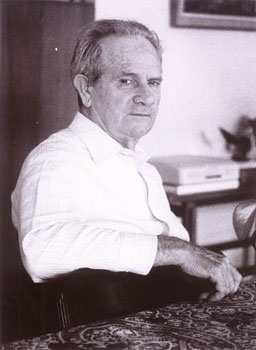
There´s a possibility that you will see the title of this section and sigh, as another anarchist flags up the profound effect of the Spanish Civil War on his political outlook. Fear not, I´m going to take a slightly controversial line. Obsessing about the Spanish Civil War can be damaging to your political health. In fact, dwelling on that past is possibly the most debilitating aspect of most anarchist groups.

Once you get bogged down on what things worked in the past, how they were organised in the past and what that means for our ideology, you´re finished. You´re a glorified historical recreation society busily trying to promote nostalgia for a revolution that happened over seventy years ago. Yes, if you´re anything like me you´ve a fondness for crying at the end of Land and Freedom, and if you lived in Spain you´ll be trying to convince your friends they want to go and see La Mujer del Anarquista at the weekend.

But modern life is not the same as semi-rural, church-dominated 1930s Spain, we aren´t re-creating the struggles of way back when, we´re existing in a modern world. In every era workers came up with innovative ways of defending themselves under capitalism and even pushing those societies toward revolution. What they came up with suited where and when they lived. Later on new generations invented new structures and organisations that suited what they wanted and how they might set about getting it. But soviets and factory councils weren´t the same as syndicates and collectives, nor were they the same as what developed in any of the revolutionary moments after that. Every time we invent something new, be it in the Hungarian Revolution or May ´68. It doesn´t come off the pamphlet in some anarchist or communist pocket, it comes out of everyday life and experience.

So what did I get out of Jose Peirats´ shorter book (there´s a 3 volume one too!)? Peirats was a member of the CNT all of his life, a historian and educator too. His book isn´t a whitewash, nor is it a hagiography of martyrs. It´s an explanation and a criticism of how he sees that the revolution went wrong. He was a convinced anarchist all his life and he was honest enough to criticise the conduct of his own organisation. It was great when I read this to understand why we don´t make examples out of history, we learn lessons and think about what happens and what´s happening now. We try not to wallow in nostalgia and assess honestly the shortcomings of our own history.

Most of all we understand that everything in history is compromised, not just by the dominant classes but by ourselves and the fact the reality is dirty and is far from Utopian. As I explained to a friend recently, I´m not a Utopian, I´m someone who wants things to better and thinks he has some insight into why they are how they are. I shouldn´t have to judge myself against the criteria of any imaginary world but on the quality and utility of my ideas in real life and in contrast to the ideals of others.

Wednesday, 21 January 2009

My 5 books Continued...

I may have inadvertently been telling a little bit of a lie when claiming that none of my books give me reason to look back and cringe. This one does only partially because of the content, but mostly because of the political point in my life that it brought me to.

3 Noam Chomsky - Pirates and Emperors

This probably could´ve been any of Chomsky´s back catalogue, largely because it´s a pretty repetitive sort of canon. The pattern is thus, Noam thoroughly chronicles the attempts of the United States government to overthrow and undermine democracies that try to assert any kind of meaningful independence from Washington directed global capitalism, doing so not on the basis of any spurious conspiracy theories, or with reference to the high standards of some Utopian fantasy land, but on the basis of their own documents and their own declared policy goals.

It´s incredibly effective stuff, and you only have to look at that truly feeble counter-arguments ranged against him to see that. Critiques flit around the edges of his work, making absurd claims as to his support for the Khmer Rouge (this attack involves deliberately misunderstanding the nature of his work) and various other things related to his sometimes naive notion of free speech.

After reading his books as a young adult/older teenager, it gave me a solid rational for my feelings about Empire and all that, which raised me above the previous stage of rebellious teenager.

On the other hand, and I suspect this qualifies as a criticism of the work and not just of my 19 year old self, it did feed into my nascent Stalinism. As a kid I was so fed up of being given the whole ´commies bad, capitalism good´mantra that I developed a knee-jerk reaction that said whatever I was told in official history, must in fact be the opposite. This eventually transformed itself into complex (but quite effective) apologies for Stalinist terror, most drawing on the idea that the Robert Conquest/CIA school of history inflated the figures (this is, in fact, true, though not really an excuse for the millions of people who died nevertheless).

That´s the limitations of Noam´s work as a whole, however much he understands intellectually that as an anarchist he doesn´t support 3rd world nationalism, Stalinism or anything like that, such is the nature of his work, understanding and comprehending the actions of nation states within their own logic, you can´t help emerging with a sneaking sympathy for the Jacobo Arbenz or the Sandinistas or Patrice Lumumba; basically admiration for social democrats with links to various Left-Wing dictatorships. Combined with the natural sympathy that American anarchists and far leftists feel for anyone that opposes their government, it´s not hard to come out the other side tragically drawing a hammer and sickle on all your school books.

So, this one was definitely part of the journey, but thankfully a place from which I have now moved on!

Friday, 16 January 2009

The 5 books...

An idea shamelessly robbed from Jim Jay, only I´m not going to imagine that anyone has the attention span to get all the way to ten, so you´re stuck with only five. Also, I was never a member of the SWP, so none of them come from their rather questionable back-catalogues.


In fact, seeing as I´m still pretty young, I reckon mine look rather respectable from my current perspective. There´s no looking back and shuddering here, I´d recommend reading each and everyone one of these...


1) Maurice Brinton - For Workers Power

Maurice Brinton, a neurosurgeon, was a member of a group called Solidarity, refugees from various Leninist groups, influenced by some unorthodox French libertarian Marxists (mainly Socialisme ou Barbarie, in particular Paul Cardan/Cornelius Castoriadis). Anyone who spent too much time hanging around Libcom.org, which compliments it´s, err, unique forum, with one of the most extensive left-wing libraries on the net, should be familiar with it. You can find a load of Brinton stuff on there, well worth flicking through. It was important to me because it helped me move beyond the idea that everything worthwhile in a revolutionary sense had to happen more or less like it did in the past, and took me toward the idea that every generation makes these things up as we go along. If you want to read something short, stick to the two short statements As We See It and As We Don´t See it, which are as a good a concise explanation of what it should mean to be a good revolutionary.


Meaningful action, for revolutionaries, is whatever increases the confidence, the autonomy, the initiative, the participation, the solidarity, the equalitarian tendencies and the self -activity of the masses and whatever assists in their demystification. Sterile and harmful action is whatever reinforces the passivity of the masses, their apathy, their cynicism, their differentiation through hierarchy, their alienation, their reliance on others to do things for them and the degree to which they can therefore be manipulated by others - even by those allegedly acting on their behalf.

2. E.P.Thompson - The Making of the Working Class

First off, if you´re interested in British history, this is a fantastic book. It´s well-written enough to be as enjoyable as it is informative (unlike his contemporaries Christopher Hill and Eric Hobsbawm, who I find dull as), it basically invented the idea of social history as we now understand it, and it gives you a great perspective on our past which is far more exciting than the conventional narrative. It traces the development of popular and social movements in England from 18th Century Republicanism to the emerging the early consciously working-class movements of the 19th.


For the political activist, I think the money quotes are all in the preface, particularly those that take apart the idea of someone or some group embodying the historical consciousness of a class:

There is today an ever-present temptation to suppose that class is a thing. This was not Marx's meaning, in his own historical writing, yet the error vitiates much latter-day "Marxist" writing. "It", the working class, is assumed to have a real existence, which can be defined almost mathematically--so many men who stand in a certain relation to the means of production. Once this is assumed it becomes possible to deduce the class-consciousness which "it" ought to have (but seldom does have) if "it" was properly aware of its own position and real interests. There is a cultural superstructure, through which this recognition dawns in inefficient ways. These cultural "lags" and distortions are a nuisance, so that it is easy to pass from this to some theory of substitution: the party, sect, or theorist, who disclose class-consciousness, not as it is, but as it ought to be.

to be continued...